
Nacogdoches County Criminal History Checks
Begin with the event and its likely custodian. The Nacogdoches County jail dashboard answers whether a person is now held in the county jail. The District Clerk preserves felony cases in the 145th and 420th District Courts. The County Clerk preserves Class A and B misdemeanor files from the County Court at Law. Fine-only citations can remain in a municipal or justice court. The Texas Department of Public Safety, or DPS, holds the statewide Computerized Criminal History repository.
A full name, date of birth, spelling variants, approximate event date, arresting agency, and cause or booking number can prevent a false match. Search results describe records, not character. A booking charge is an allegation at intake, while a judgment states what the court finally decided.
- Decide whether the question concerns custody, a filed case, a police report, or a statewide history.
- Search the county jail for current custody and the right clerk for filed Nacogdoches County criminal records.
- Check municipal or justice court when a fine-only charge does not appear in a county clerk search.
- Compare the local result with DPS when a reported Texas conviction or deferred adjudication matters.
- Order a certified clerk copy or fingerprint personal review when identity and official proof are important.
Note: Record the date, spelling, and system used so later updates can be compared without confusing two people who share a name.
Nacogdoches County Records Have Separate Doors
Nacogdoches County moved core directory and request functions to a current government site while the sheriff still operates key jail tools on a legacy domain. That split is not a sign that one channel is unofficial. It means a careful search may use both. The current county home page is the best place to confirm offices and notices.

The county page supplies the current public front door, while the sheriff dashboard supplies live jail functions. Before visiting, use the Nacogdoches County directory to confirm the office and current contact details.
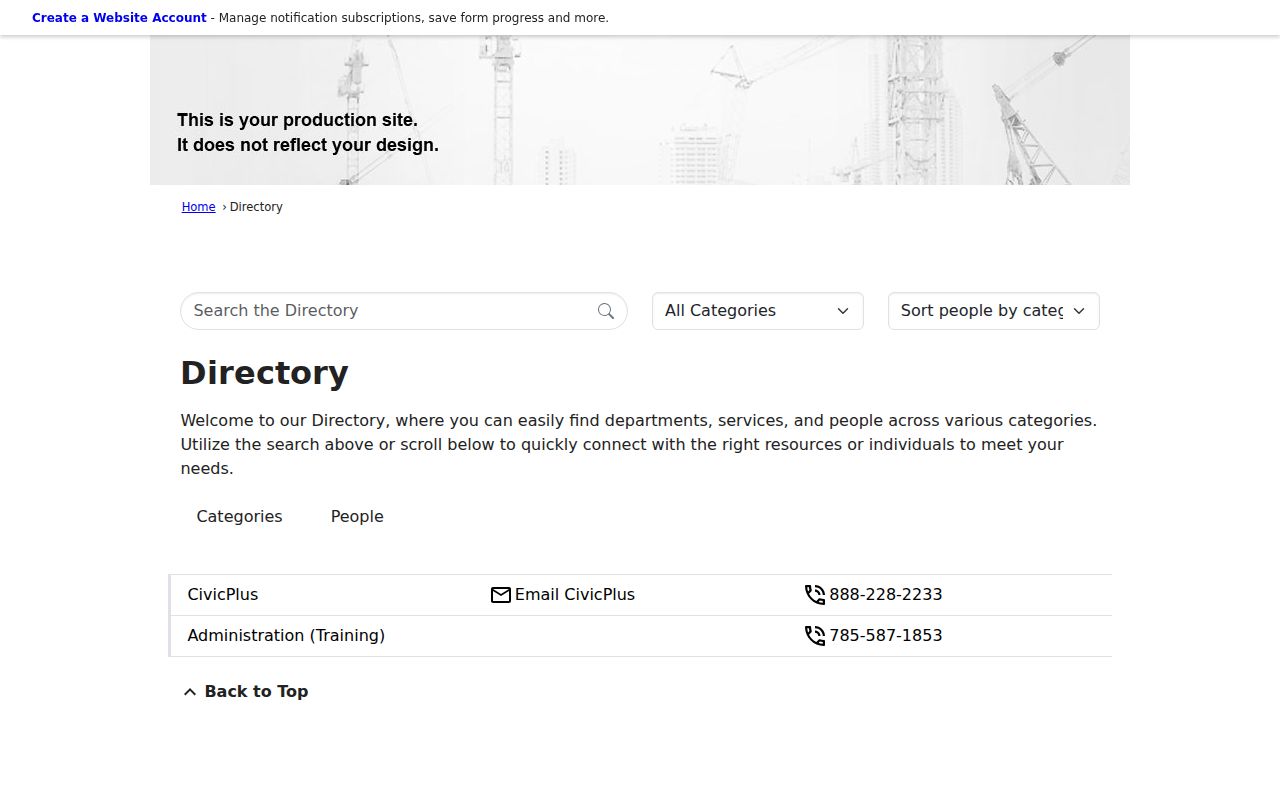
The directory helps route a felony file to the District Clerk, a misdemeanor file to the County Clerk, and a sheriff-created report to the Sheriff's Office.
Official Background Checks in Texas
The Texas DPS Crime Records Division maintains the state repository. Its public name product principally exposes convictions and deferred adjudications reported to DPS. It is not the same as a fingerprint-confirmed copy of one's own record. A name search can return a similar person, and an event may be absent because it was not submitted or a disposition failed to post.
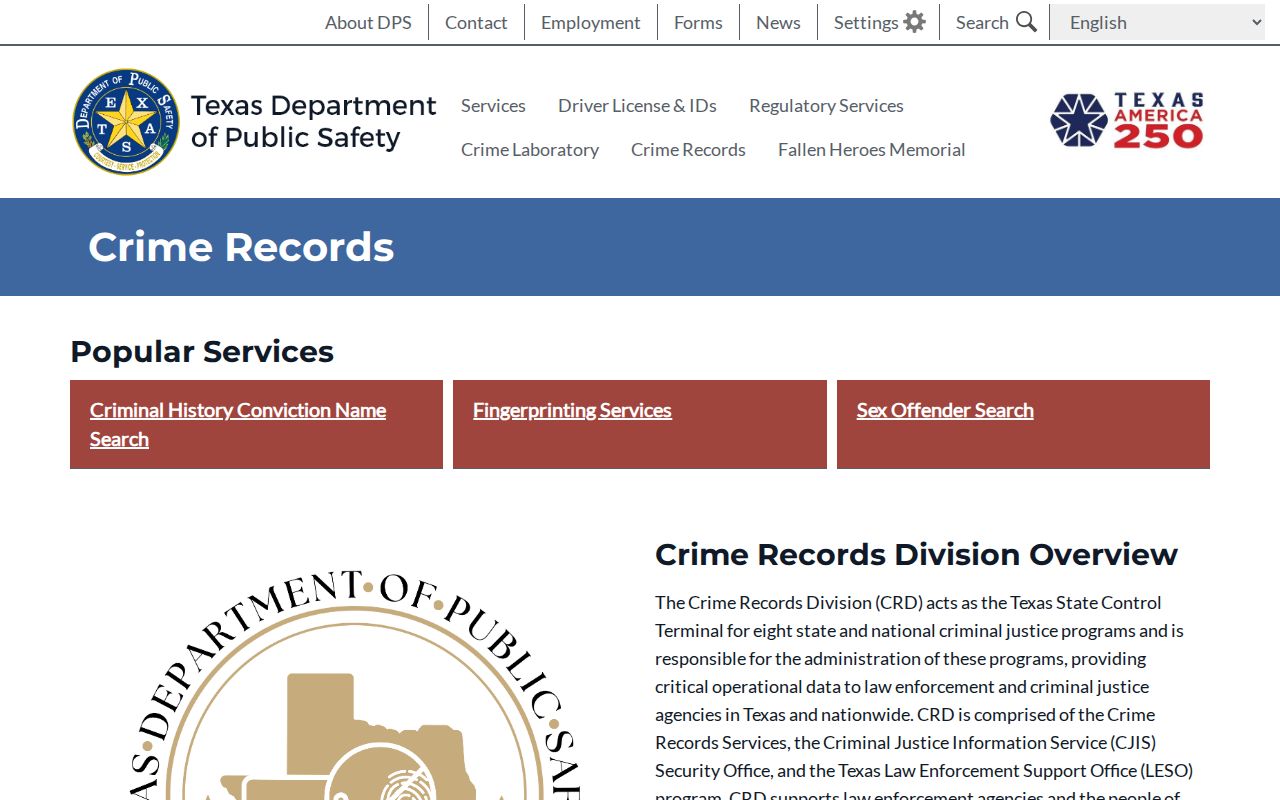
DPS publishes program guidance and directs the public to its live systems. The DPS public search portal requires an account and search credits, with live pricing shown during the current workflow.
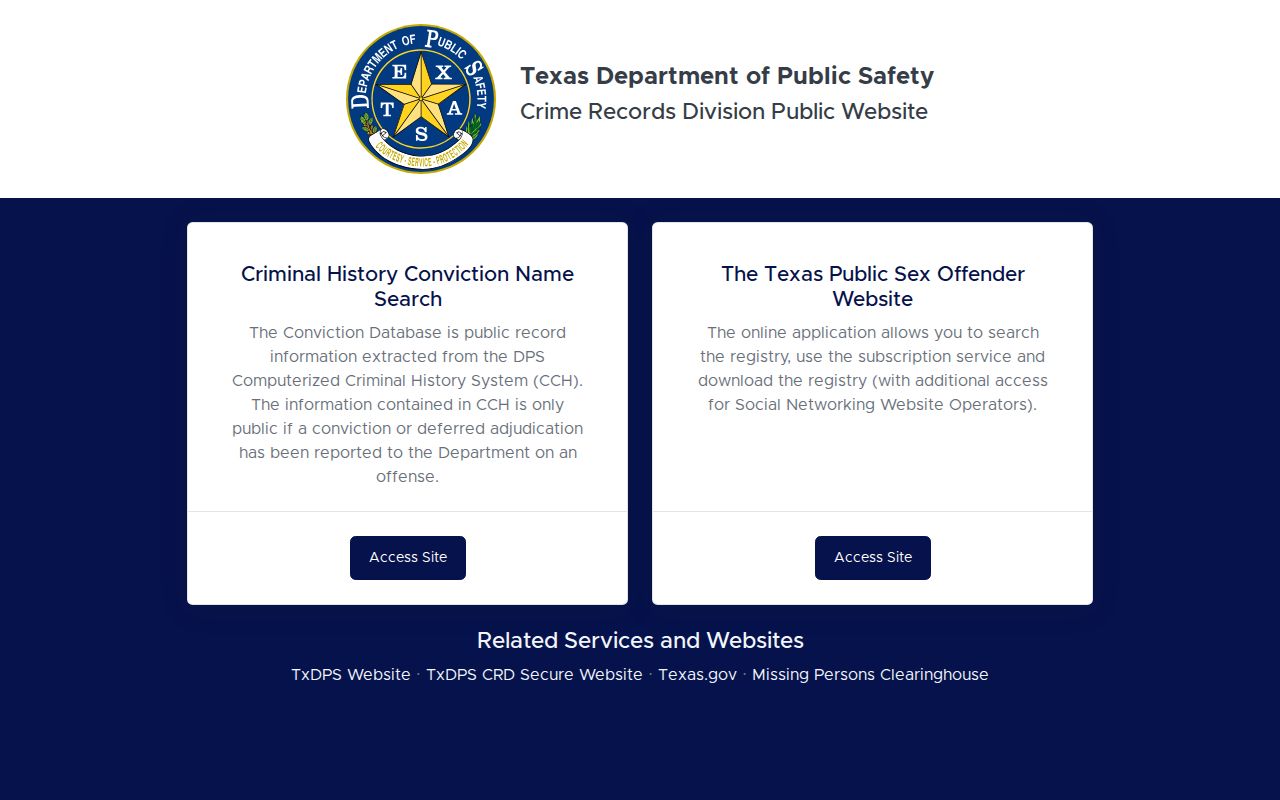
The public portal uses biographical matching. A fingerprint personal review is the stronger choice for checking one's own Texas criminal history.
FAST Fingerprints Beat a Name Match
Texas Fingerprint Applicant Services of Texas, or FAST, uses IdentoGO by IDEMIA. DPS states that a personal fingerprint review costs $15 plus a $10 FAST fingerprinting fee. Two hard cards alone cost $20 through FAST, and local law enforcement may charge up to $10 per card. These are distinct services, so choose the DPS purpose and service code before scheduling.
The official FAST appointment site or 1-888-467-2080 handles scheduling from 8 a.m. to 9 p.m. Central. The research did not verify a stable Nacogdoches enrollment-site address, so the live locator should control the location and hours.
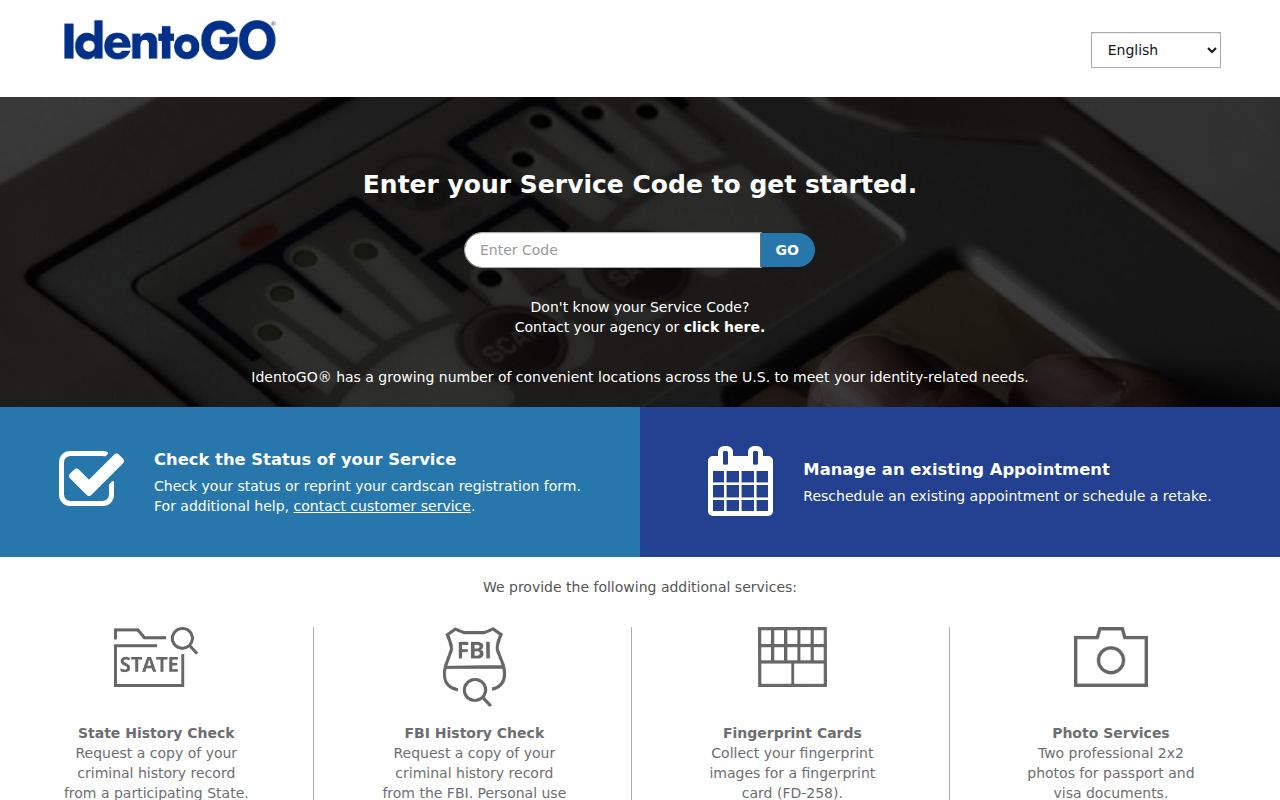
Fingerprint matching ties the search to identity rather than just a name and birth date. That difference is vital when reviewing an apparent error or missing disposition.
| Official channel | Use | Published amount |
|---|---|---|
| DPS public name search | Public conviction and deferred-adjudication information | Portal pricing at checkout; DPS states $10 for an offline name check |
| DPS personal review | Fingerprint-based self-review | $15 record check plus $10 FAST fingerprinting |
| FAST hard cards | Two fingerprint cards only | $20 through FAST |
Kinds of Criminal Records
A Nacogdoches County criminal record is not one universal file. Each record captures one part of the path from an incident through custody, court, and supervision. The source determines what the result proves.
- Incident or offense report
- The sheriff or police narrative and evidence metadata for the event that agency handled.
- Booking record
- The county jail intake event, photo, fingerprints, custody class, booking charge, and bond information that the system exposes.
- Court case file
- The complaint or indictment, motions, docket, plea, judgment, sentence, and costs held by the proper clerk.
- DPS criminal history
- Reportable Texas arrest cycles and dispositions received by the state repository, with public and restricted views.
- Supervision record
- County community supervision, state parole, or prison status kept outside the trial-court case index.
Warrants and sex offender registry profiles are also separate products. An unserved warrant may not be public, while a registry profile exists to meet Chapter 62 notice duties and is not a broad background report.
Nacogdoches Jail Records Track Custody
The Sheriff's Office and County Jail at 2306 Douglass Highway keep sheriff-created incident, arrest, booking, and custody records. Its dashboard gives an hourly view of population categories, male and female totals, and booking-ins and booking-outs for daily, monthly, and yearly periods. The name field also displays the unusual but useful *ALL instruction for a list of current inmates.
That dashboard mixes a stock count with flow counts. The population is a snapshot of who is held now. Booking-ins describe movement during a time span. Neither figure is the county's annual conviction count, and neither tells how a pending charge ended. A person can leave the roster because of release, bond, transfer, or another custody change.
| Jail field | What it answers | What it does not answer |
|---|---|---|
| Name and admission date | Whether a matching person appears in current custody | Final identity or guilt |
| Population category | The dashboard's current custody grouping | Final court disposition |
| Booking in/out counts | Custody flow for the stated period | Unique arrests or convictions |
For historical booking data or a sheriff report, use the county's designated public information channel instead of expecting the current roster to serve as an archive.
Nacogdoches County Criminal Records: What They Contain
A complete state cycle can include identity descriptors, SID and FBI identifiers, fingerprint tracking data, arrest date and agency, the arrest offense, the filed charge, disposition, and sentence. Public DPS results are narrower. Court files add the cause number, court, filing date, counsel, charging instrument, statute and degree, bond, hearings, plea, judgment, costs, and later activity.
| Name and identifiers | Identity descriptors and record numbers used to distinguish people and events. |
|---|---|
| Arrest and booking | Agency, date, intake facts, asserted charges, bond, and custody status where public. |
| Filed charges | The prosecutor's charge, statute, degree, and court cause number. |
| Disposition | Dismissal, deferred adjudication, plea, acquittal, or conviction as recorded by the court. |
| Sentence | Custody, fine, community supervision, and other terms entered in the judgment. |
Juvenile facts, victim details, medical data, and protected identifiers can be withheld or redacted. A gap is a reason to check the originating clerk or agency, not proof that no event exists.
When Nacogdoches Records Disagree
Records are created at different times. The arresting agency describes probable cause. Jail staff record the booking charge. A prosecutor decides what to file, and the clerk reports the outcome to DPS. A changed charge is therefore not an error by itself. Nor does a dismissed case erase the earlier booking record automatically.
If DPS shows no disposition, compare the arrest date and agency with the correct Nacogdoches County clerk file. DPS notes that a missing outcome may mean the clerk did not report it or a transmission was rejected. For one's own record, use the fingerprint personal-review process and follow the official correction path. The DPS criminal history guidance explains the public product's reach.
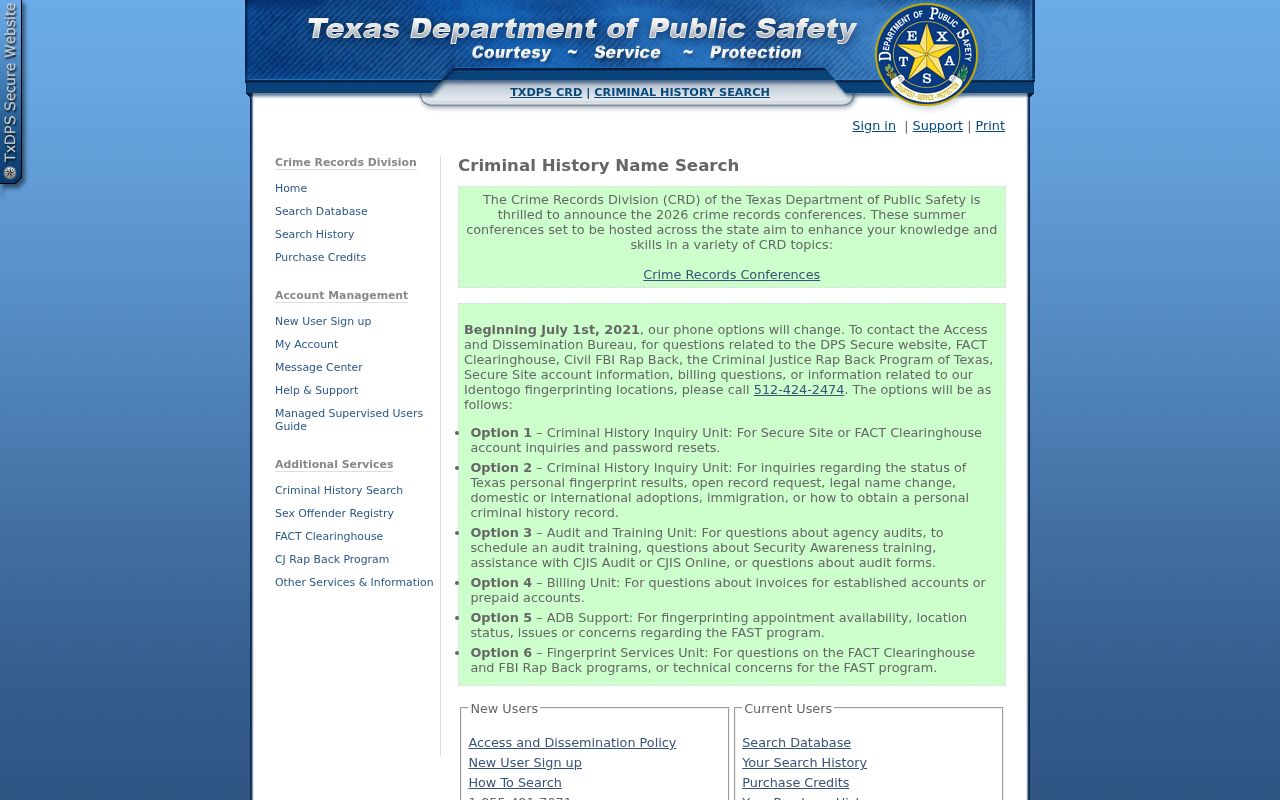
The guidance reinforces why a public name result and a fingerprint-confirmed personal review should not be treated as the same record.
Texas Public Access Laws
The Texas Public Information Act covers recorded information held by many government bodies, but it does not make all criminal history public. Court records can also fall under judicial access rules. The request must go to the custodian and ask for an existing record, not demand legal research or a new report.
Key statutes:
Government Code Chapter 552 creates public access, prompt-production duties, request methods, cost rules, and exceptions.
Government Code Chapter 411 limits criminal-history dissemination while authorizing specified public conviction data.
Code of Criminal Procedure Chapter 66 governs reporting into the state criminal-history system.
Code of Criminal Procedure Chapter 62 governs sex offender registration and public notice.
Section 552.221 requires production as soon as possible under the circumstances. It does not promise every record in ten business days. Section 552.301's ten-business-day period usually concerns an agency request for an Attorney General ruling when information may be withheld.
Nacogdoches Public Record Requests
Use the county Public Information Request page for records held by the county and follow its designated method. State the record type, approximate date and time, location, person involved, and an incident, cause, or booking number when known. Narrow requests reduce search and redaction work. A body-camera request has special precision rules and must identify the person, approximate time, and location.
The sheriff is not the custodian of a Nacogdoches Police Department report, and a clerk is not the custodian of an offense narrative. Ask the agency that created the report. For a filed judgment, ask the proper clerk. The current research found no stable sheriff fee schedule or universal turnaround beyond the TPIA promptness standard, so request a cost estimate and ask whether inspection or electronic delivery is available.
Active investigations, juvenile material, victim identifiers, medical facts, and protected addresses may be withheld or redacted under applicable law. A partial release can still provide useful basic offense or booking information.
Restricted, Sealed & Expunged Records
Texas distinguishes expunction from an order of nondisclosure. An expunction under Code of Criminal Procedure Chapter 55A can require covered agencies to destroy or return eligible records. A nondisclosure order under Government Code Chapter 411, Subchapter E-1 generally blocks ordinary public release of specified history while allowing access by agencies and entities named in law.
Neither remedy follows every dismissal, and eligibility depends on the charge, disposition, waiting periods, prior history, and the statute in force. The court that handled the Nacogdoches County matter is the practical place to verify the cause file before any petition. The current Chapter 55A took effect through a recodification on January 1, 2025.
A record can also be restricted without either remedy. Juvenile justice data, victim information, private identifiers, and some law-enforcement material have separate access limits. Search absence alone does not prove that a court granted relief.
Nacogdoches Warrants and Court Levels
Nacogdoches County has no verified public countywide warrant portal in the research. A warrant may originate in a district court, the County Court at Law, a justice court, or a municipal court. Unserved warrant information may be restricted. The safest route is to contact the issuing court or the agency that holds the warrant and address one's own warrant through official channels.
Court level matters. The 145th and 420th District Courts hear felonies. The County Court at Law handles Class A and B misdemeanors. Municipal and justice courts handle fine-only matters within their jurisdiction. The courthouse at 101 West Main Street is the practical start for filed county cases, while booking and sheriff reports remain at the Sheriff's Office and jail on Douglass Highway.
The distinction also explains why one name search can miss a result. A fine-only municipal citation may never enter a District Clerk index, and a booking can appear before prosecutors file a court case. Use the Nacogdoches County court case lookup when the filed charge and disposition are the real question.
Nacogdoches County Supervision Records
Local community supervision, often called probation, runs through the Nacogdoches County Community Supervision and Corrections Department under court oversight. The Texas Department of Criminal Justice Community Justice Assistance Division supports and regulates county CSCDs. A court file shows the sentence, while the supervision office handles the day-to-day terms.
The TDCJ county probation directory is the official place to confirm the local CSCD channel.
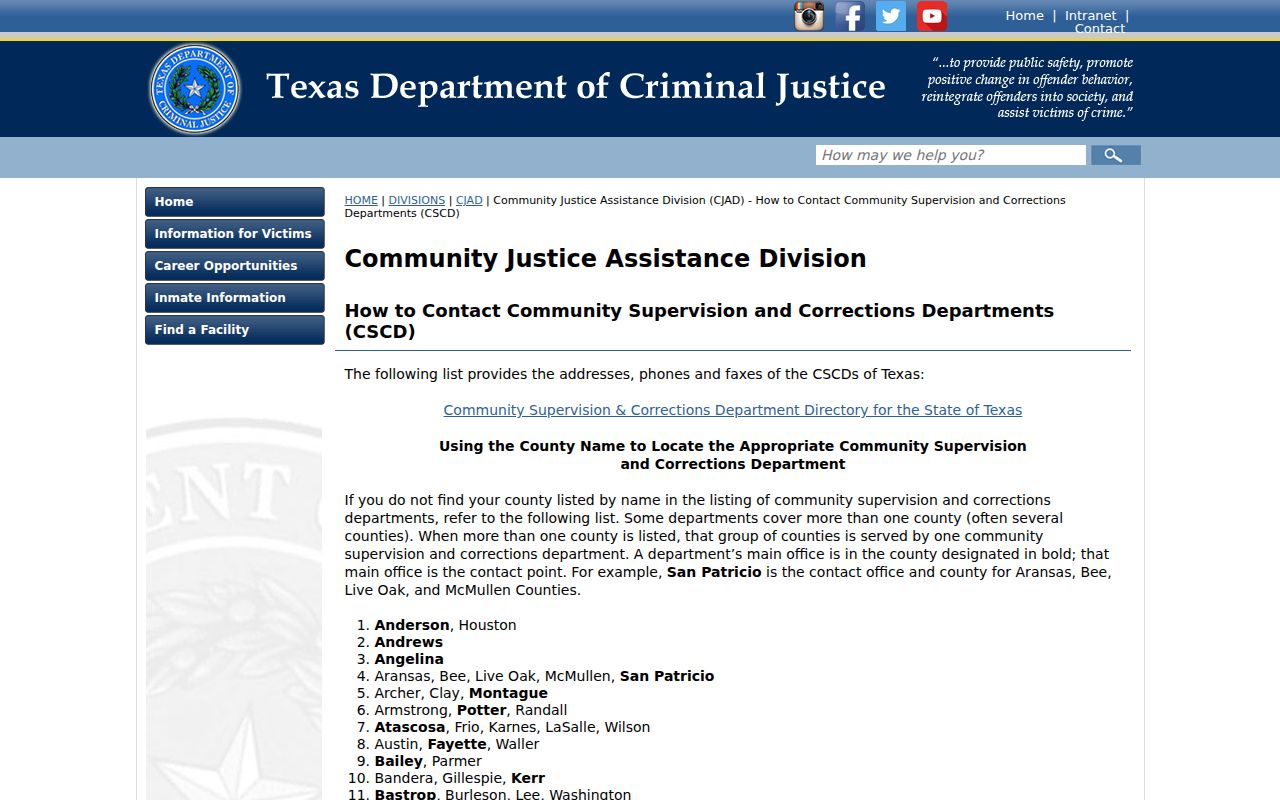
Parole is different. The Texas Board of Pardons and Paroles makes release decisions, and the TDCJ Parole Division supervises releasees. The Region I parole directory lists the Nacogdoches District Parole Office at 1113 Industrial Boulevard, Nacogdoches, Texas 75964, phone 936-569-6234.
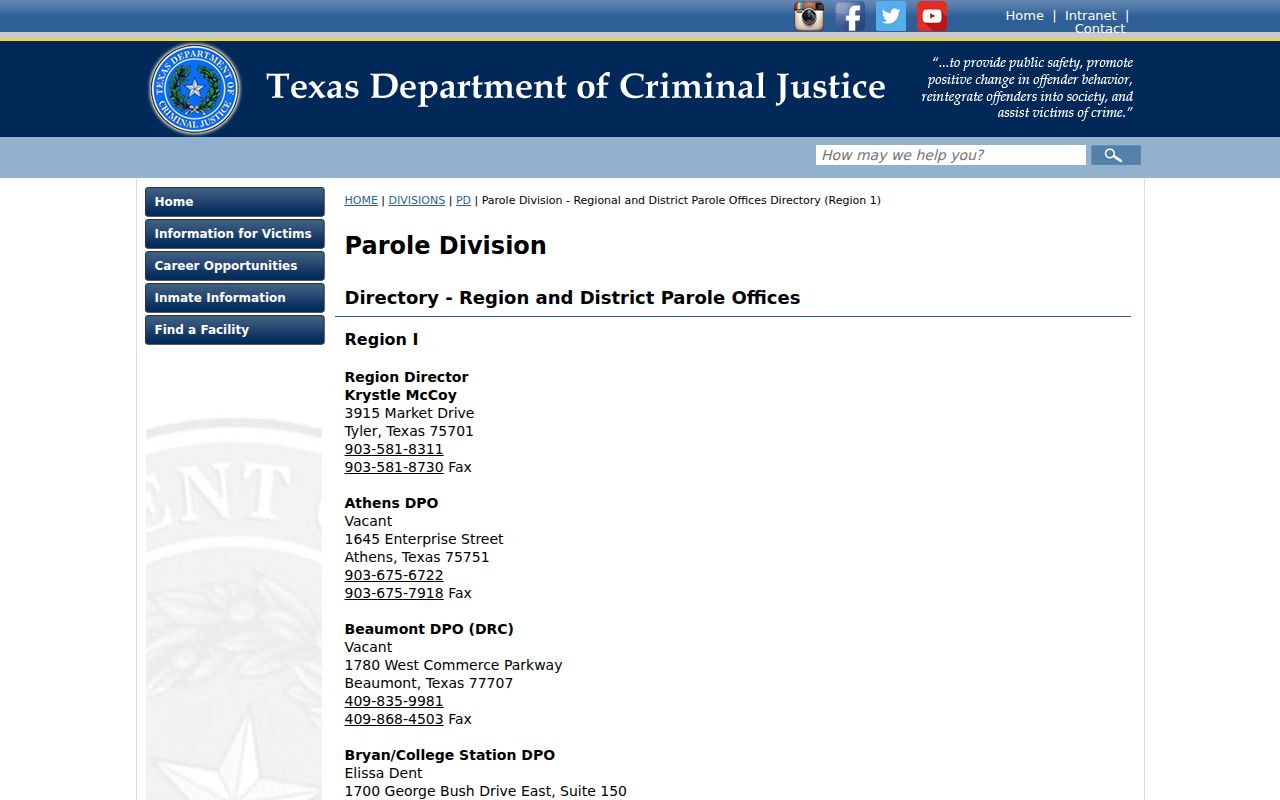
Community supervision is a court sentence served locally. Parole follows release from state custody. A blue-warrant hold on the jail dashboard signals an alleged parole violation, not a new conviction.
City-by-City Criminal Records in Nacogdoches County
City police reports and fine-only municipal files begin at city level, even when a later booking uses the county jail. Nacogdoches has its own police and municipal court channels. Garrison publishes municipal court contacts but no public case search. Cushing directs users through City Hall because no dedicated police-record or municipal lookup was found.
Nacogdoches Record Check
County seat with city police, municipal court, mail, fax, counter, and published court instructions.
Garrison Record Check
Direct city and municipal court contact, then county jail or clerks when the record moved.
Cushing Record Check
City Hall identifies the responding agency and correct custodian before a request is sent.
Nacogdoches Criminal Records Need Verification
A sound record check follows the trail instead of forcing every fact into one database. Compare a current booking with the arresting agency and the filed court case. Compare a DPS result with a certified clerk disposition when an outcome appears stale. After transfer from the county jail, use the TDCJ Online Inmate Search for state custody.
Federal records form another layer. PACER holds federal dockets, the Eastern District of Texas is the relevant federal court district, and the Bureau of Prisons locator covers federal custody. Those sources do not replace Nacogdoches County court files. The registry also has a separate public-safety purpose, with detailed search steps on the Nacogdoches County sex offender lookup.
Use exact identifiers, save the search date, and verify important facts with the office that created the original record. That method respects both the limits of public data and the difference between an allegation, a filed charge, and a final judgment.